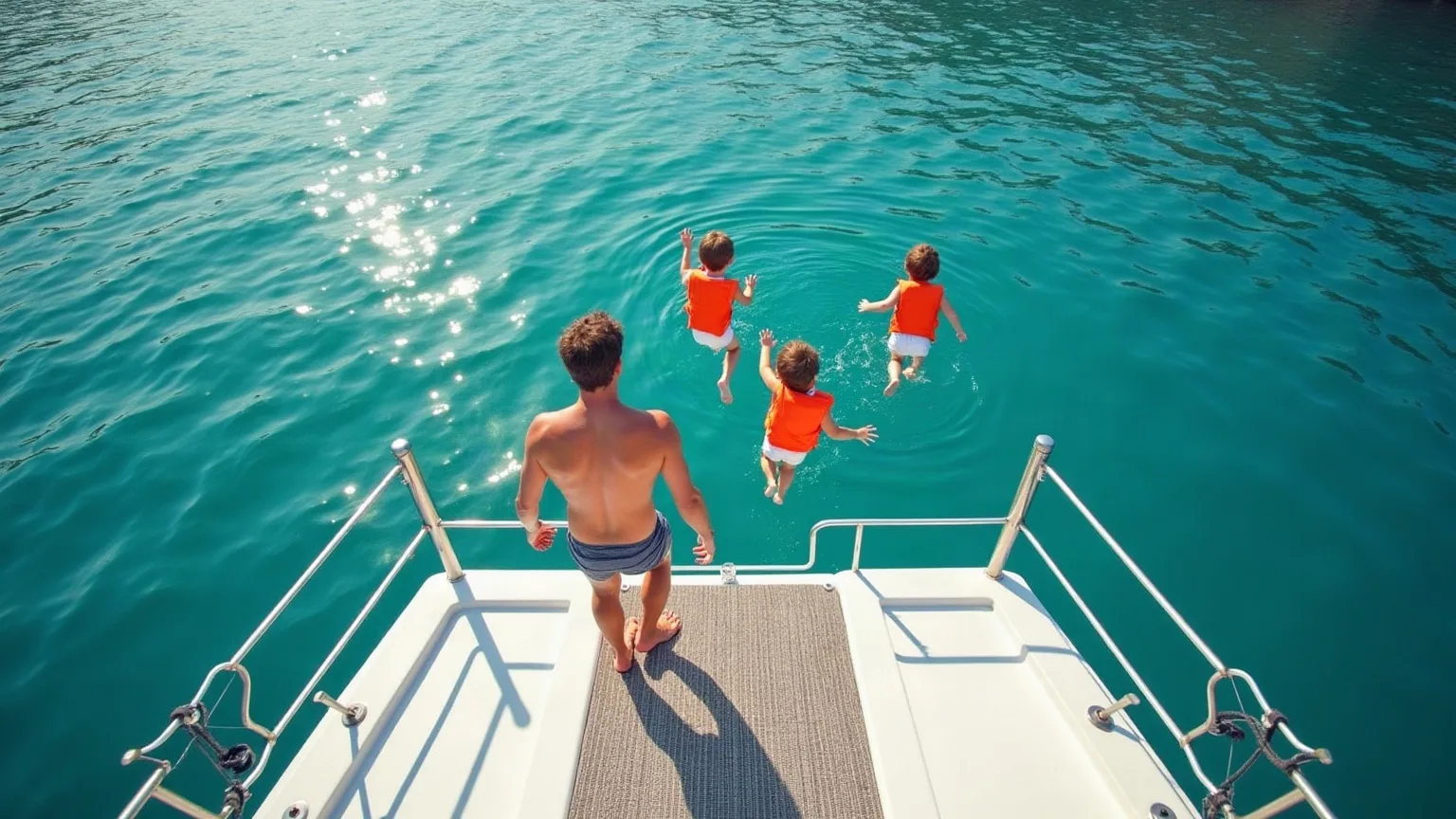
A yacht charter with kids works when three things are right: the type of yacht, the pace of the week and the stretch of sea you choose. Get those right and children tend to remember a week afloat long after they have forgotten most hotels.
Get them wrong and the same week feels cramped, hot and long. The difference rarely comes down to the children. It comes down to planning that starts from how a family spends a day, not from how far the yacht could sail in one.
Here is what works on board with children of different ages, from the choice of yacht to the route.
Which yacht suits a family
For most families the answer is a catamaran with a skipper or a full crew. It gives children room to move, keeps the boat level and leaves the adults free to watch them rather than the sails.
A catamaran sails flat instead of heeling, so drinks stay on the table and small children can move around without being thrown against the furniture. The cockpit is wide and shaded, the cabins sit in separate hulls, which helps when one child naps while another plays, and the stern steps lead straight down to the water. If that sounds like your week, start with our catamaran charters in Greece and narrow them down by cabins.
A monohull is not the wrong choice. Older children who want to feel the boat heel and help with the sailing often prefer one, and the trade-offs are set out in full in our guide on whether a catamaran or a monohull suits your group.
The bigger decision is who runs the yacht. With young children on board, adult attention is the scarce resource, and every hour spent on lines, navigation or cooking is an hour not spent watching the swim ladder.
| How you charter | What it means for a family |
|---|---|
| Crewed | The crew sail, cook and look after the yacht. Parents are free to be with the children all day. |
| Skippered | A professional skipper handles the sailing. You plan meals and keep the boat tidy yourselves. |
| Bareboat | You sail the yacht yourselves. Works with older children and two capable adults, hard work with toddlers. |
| Cabin charter | You share a skippered yacht with other guests. Suits a parent and one older child more than a young family. |
For a family with children under school age, a crewed yacht charter in Greece is usually the format that makes the week feel like a holiday for the parents too. A skippered yacht charter is the next step down, with the sailing handled and the rest of the week in your hands.
Ages and what changes
The younger the children, the more the week has to bend around them. Older children bend the week around themselves, which is a different kind of planning.
Babies. A baby on board is mostly a question of shade and sleep. Babies under six months should be kept out of direct sunlight, so the bimini, the saloon and a quiet cabin matter more than the itinerary. Lifejackets are made in baby sizes, and one that fits properly is part of the packing list, not an extra.
Toddlers. This is the most demanding age on a yacht. Toddlers are quick, curious and have no sense of where the deck ends. They need an adult within reach whenever they are outside the cabin, and a lifejacket on deck at all times.
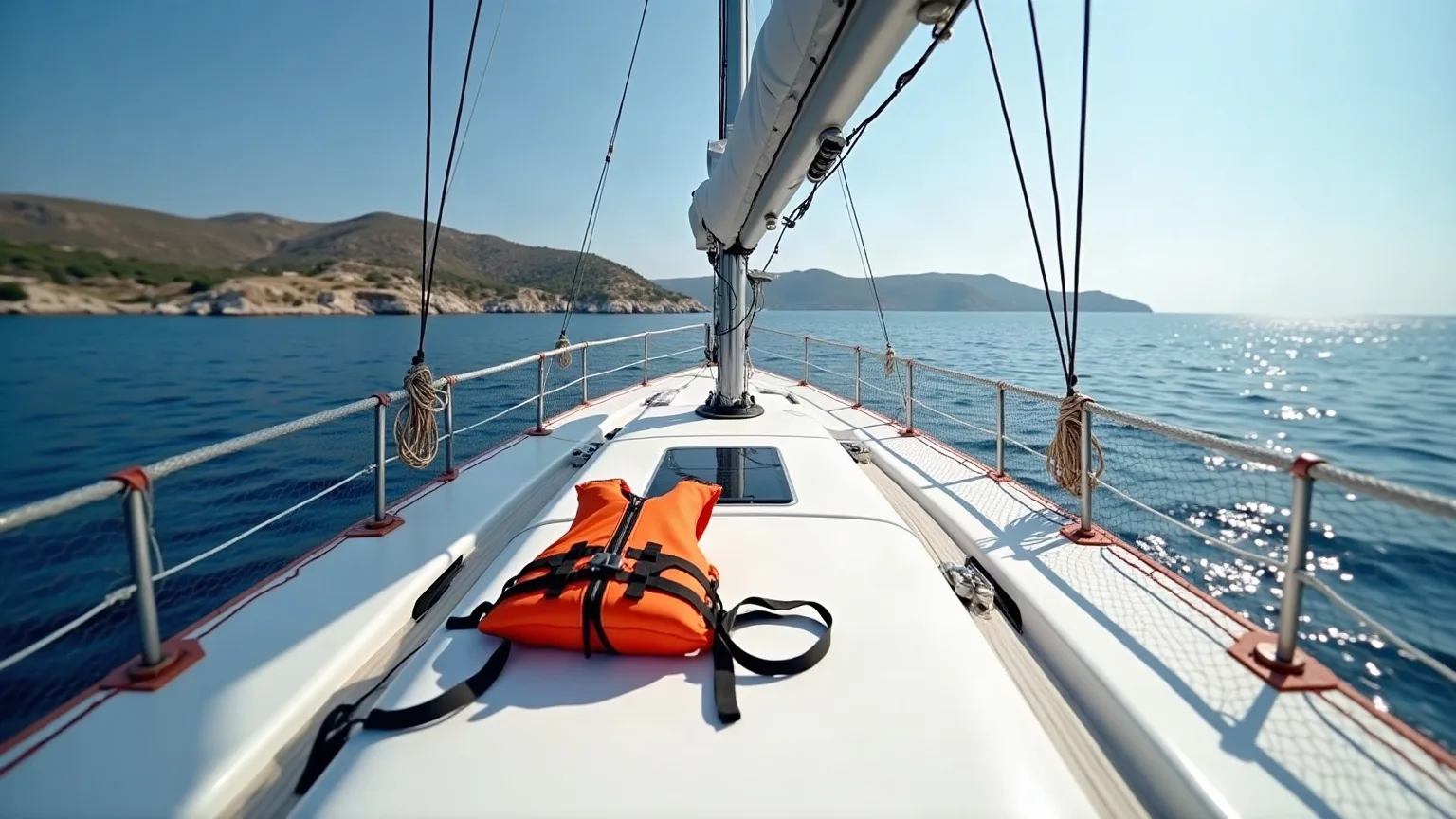
School age. Many parents find this the easiest age for a charter. Children can swim, snorkel, help with fenders and lines, and steer for a while with the skipper beside them. They also sleep well after a day in the water.
Teenagers. Teenagers want something to do that is theirs. Driving the tender with an adult, a paddleboard, a snorkelling route of their own or a real job during the sailing keep them involved. A cabin with a door they can close helps more than any activity.
Safety on deck
Safety on a family charter comes from a few simple rules applied every day, not from constant worry. Agree them on the first morning, before anyone is excited, and keep them the same all week.
House rules that work on board
- Lifejackets that fit. A lifejacket that rides up is not doing its job. Crotch or thigh straps stop it rising, and a buoyancy aid is not the same thing, because it will not turn a person face up in the water.
- Inside the lifelines. Children stay inside the lifelines and nets, and never sit on the edge of the deck while the yacht is moving.
- One hand for the boat. When moving around under way, everyone holds on with one hand.
- Swimming only at anchor. Nobody goes in the water until the engine is off and an adult says so, and an adult is always watching from the stern.
- Shade in the middle of the day. Children cover up, stay in the shade when the sun is strongest and wear a high-factor sunscreen, reapplied after every swim.
Ask before you travel which children’s lifejackets are on board and in which sizes. If your child is very small, or you simply prefer a jacket they already know, bring your own and try it on at home first.
Keeping children occupied
Children rarely need entertaining for long on a yacht. The sea does most of the work, as long as each day has real time in the water and not only time on passage.
A good rhythm is a short sail, a long swim stop, lunch, a quiet hour and then the beach or the harbour. Snorkelling over rocks, rowing or motoring the tender to a beach, collecting shells and jumping off the stern fill hours without any plan at all.
Small jobs help more than games. Children who are given the fenders to look after, a rope to coil or the task of spotting the next headland feel part of the crew, and they listen better when it matters. For a sense of how a day unfolds when the crew run the yacht, see a day on a crewed charter, hour by hour.
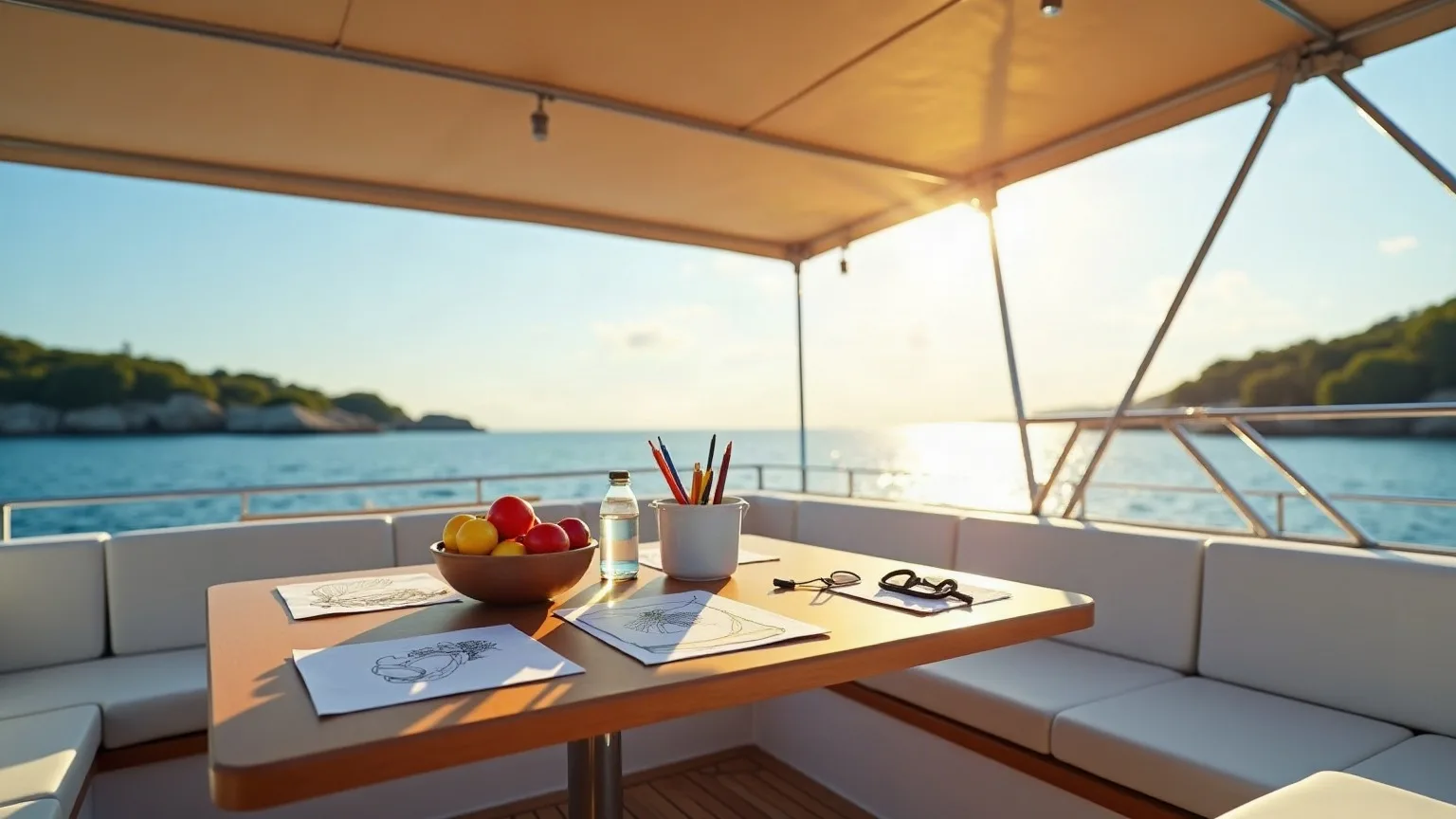
Pack for the quiet hour too. Books, cards, colouring and a downloaded film for a windy afternoon cost nothing in space and save a lot of patience.
Food and routine
Keep the children’s routine close to the one they have at home: meals at familiar times, a rest after lunch and an early night. A yacht is a small space, and tired children fill it quickly.
On a crewed charter, send the crew a short note before the trip with what the children eat, what they will not touch and any allergies. On a skippered charter, plan the first provisioning around foods the children already like, and keep water and simple snacks within reach of the cockpit all day.
Plan the sailing in the morning and the swimming in the afternoon. Children who have spent the morning on passage are ready to swim, and an afternoon nap at anchor is far easier than one under sail.
Route choices
Choose short passages in sheltered water, and plan the week around the anchorages rather than the distance covered. Families are happiest when every day ends somewhere calm.
The Ionian islands are the usual choice for younger children, with gentle afternoon breezes and short hops between green islands. The Saronic Gulf works well for a shorter trip from Athens, with very short distances between harbours.
The Cyclades are spectacular but in high summer they are shaped by the meltemi, and a windy week in open water is a lot to ask of small children. With older children and a skipper they are a fine choice, especially early or late in the season.
Whatever the area, build in one day with no passage at all. A beach day at anchor is often the one the children talk about most.
Frequently Asked Questions
Is a catamaran safer than a monohull for a family?
Neither is unsafe when sailed well. A catamaran sails flat, stays level at anchor and has a wide cockpit and nets forward, which makes young children easier to keep settled. Older children often enjoy the heel of a monohull.
Where in Greece is best for a family sailing holiday?
The Ionian and the Saronic Gulf for younger children, thanks to sheltered water and short distances. The Cyclades suit families with older children and a skipper, best outside the strongest meltemi weeks of July and August.
Sources
- RNLI, Lifejackets and buoyancy aids: choose and maintain yours. https://rnli.org/water-safety/lifejackets
- NHS, Sunscreen and sun safety. https://www.nhs.uk/live-well/seasonal-health/sunscreen-and-sun-safety/
Tell us the ages of your children, your dates and how much sailing you actually want, and we will put together a crewed charter proposal around them.
Request a crewed charter proposal