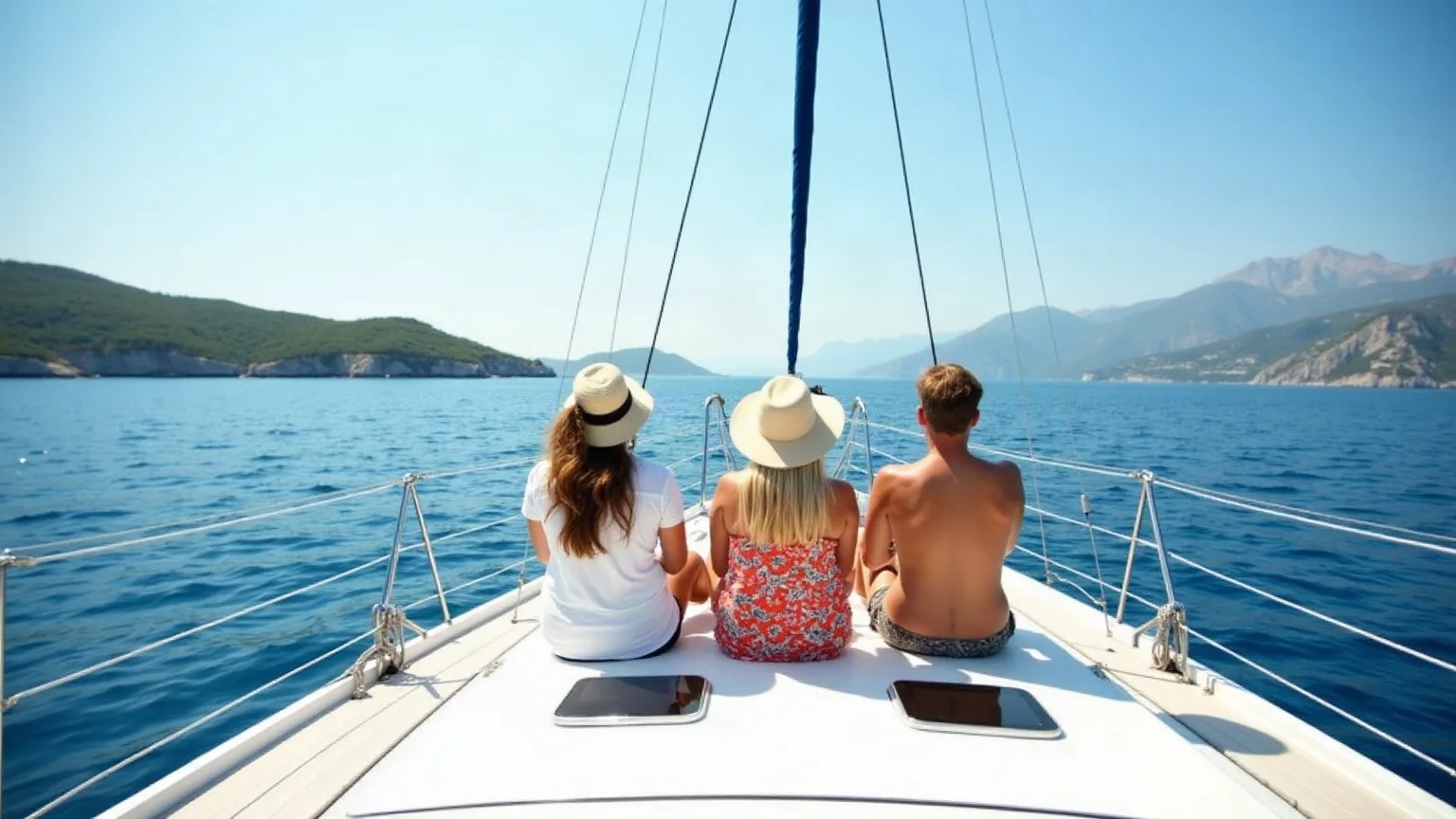
Short answer
Yes, a yacht charter suits beginners, as long as someone on board knows how to sail. For beginners, that usually means a skippered or crewed charter, where a professional runs the boat and nobody in your group needs a licence, in a sheltered sea such as the Ionian.
What beginners should not book is a bareboat charter, where you sail the yacht yourselves. That needs a recognised qualification and real experience, and it is the one format a first-timer cannot simply learn on the way.
The rest of this guide covers the choices that make a first week easy: the format, the region, what you will actually be asked to do and what tends to surprise people. If you already know the dates, the list of yachts shows what is on offer.
Which format
There are four charter formats on our list, and three of them work for a first time with no experience.
| Format | Who sails | Good for a first charter? |
|---|---|---|
| Skippered | A professional skipper, with you helping if you want | Yes. Nobody in the group needs a licence |
| Crewed | A captain and crew, who also cook and look after you | Yes, if you want service as well as sailing |
| Cabin charter | The yacht’s crew, on a shared yacht with set departure dates | Yes, if you do not need the whole yacht |
| Bareboat | You, with a recognised licence | No, not without experience |
A skippered yacht charter in Greece gives you the yacht and a professional skipper who navigates, handles mooring and plans each day around the weather. If you want to take the helm or learn to trim a sail, most skippers are happy to teach. The shopping, cooking and tidying stay with you.
A crewed yacht charter in Greece adds a team that cooks, cleans and looks after the guests, so the week runs more like a small hotel at sea. Our comparison of skippered and crewed charters sets the two side by side.
If the group is split between the two, the deciding question is usually the cooking. A group happy to shop and eat ashore does well with a skipper. A celebration, several generations together or a family with young children often find that a crew changes the week completely.
A cabin charter in Greece books a single cabin on a shared yacht, with set departure dates. It is a simple way to try a week at sea without chartering the whole boat.
Bareboat is the exception. You take the helm yourself, which needs the required licence, and our guide to whether you need a licence to charter in Greece explains what is accepted.
Which region
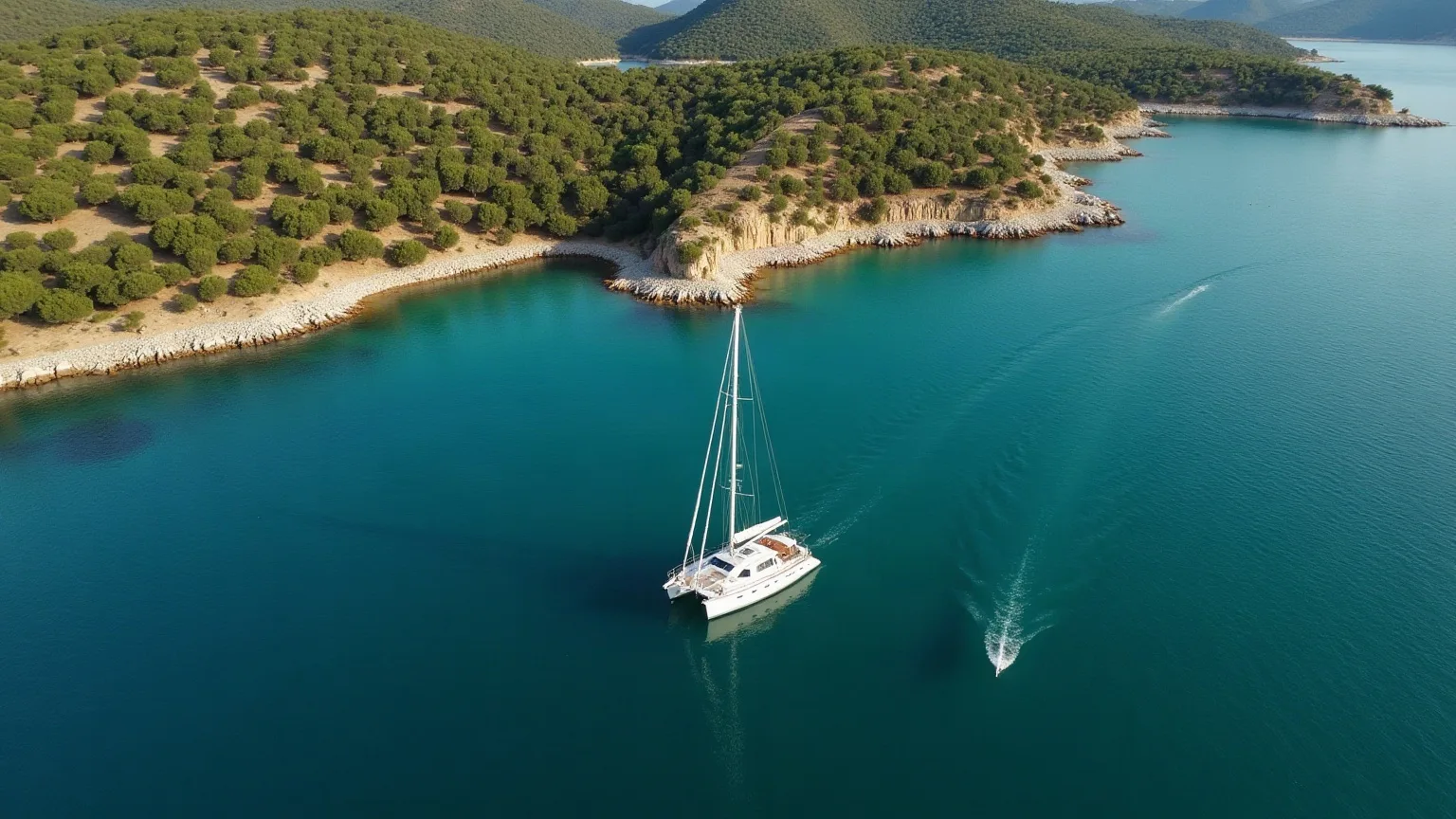
For a first charter, the Ionian is the answer more often than not. The water is calm because the islands shelter each other, the distances between anchorages are short, and the wind is a predictable afternoon sea breeze.
That predictability matters more than any single island. You can plan tomorrow tonight and be roughly right, nobody spends six hours on a passage, and there is a taverna close to most anchorages. Our first week in the Ionian shows a realistic route, and the Ionian Islands yacht charter page is the place to start.
The Saronic Gulf, close to Athens, is the other gentle option, especially for a shorter trip. The Cyclades are the most demanding of the main sailing areas in high summer. They are not off limits to beginners with a skipper, but our guide to sailing the Cyclades with the meltemi explains why they are usually a second charter rather than a first.
What you will be asked to do
On a skippered charter, less than you might fear. The skipper sails and moors the yacht, and your part is mostly the life of the boat.
Expect a briefing on the first day: where the lifejackets are, how the marine toilets work, how to use the fresh water sparingly and where to stand when the yacht is coming into a harbour. After that, the skipper may ask for a hand with a line or a fender, and the rest is up to you.
What to expect on the first evening is mostly practical. You board in the afternoon, carry the bags aboard, meet the skipper and settle into the cabins, and most crews stay at or near the base that night, so the sailing starts properly the next morning.
On a crewed charter, you are a guest. The crew handle the sailing, the meals and the cleaning, and you decide where you would like to go and when you want to eat.
On every format, a few things are yours. Turn up with the documents the charter needs, keep the saloon liveable on a skippered yacht, and listen when the skipper says the plan has changed because of the weather.
What surprises first timers
Most surprises are about space, movement and time, and none of them spoil a week once you know to expect them.
Space comes first. Cabins are compact compared with a hotel room, storage is limited and soft bags fit where suitcases do not. A larger yacht or one fewer guest makes more difference to comfort than any extra feature.
Movement is the second. A monohull heels when it sails, which feels dramatic the first time and normal by the second day. A catamaran sails flat and stays level at anchor, which many first-timers find easier. Our guide to catamaran or monohull compares the two.
Time is the third, and it is the pleasant one. A charter week is mostly not sailing. It is swimming off the back of the boat, long lunches at anchor and evenings ashore, with a few hours under way in between. People who expect a busy itinerary are often surprised how much of the week is simply slow.
The rhythm of the day can be a surprise too. Mornings are usually the calmest part of the day on the water, so passages tend to start early and finish by lunchtime, which leaves the afternoon for the beach and the evening for the village.
Some people feel queasy on the first day. Sitting in the middle of the boat, looking at a fixed point such as the horizon and getting fresh air all help, and a pharmacist can recommend a remedy before you travel.
How to prepare
Preparation for a first charter is mostly about choices made before you leave home, not skills.
Before a first charter
- Choose the format first, then the region, then the yacht.
- Be honest about the group: who wants to sail, who wants to rest and who is nervous on the water.
- Pack light, in soft bags, with sun protection, swimwear and one warm layer for the evenings.
- Have the paperwork ready: passports or identity cards for everyone and the crew list, so check-in is quick.
- Tell the skipper about anyone who cannot swim, children’s ages and any dietary needs.
For July and August, decide early. The right yacht in the right base on a particular Saturday is what runs out first, while the rest of the plan can be settled closer to the date.
If you would like to learn, say so when you book. A skipper who knows that one of the group wants to helm can plan the easier legs as a lesson. If nobody wants to learn, say that too, and the week can be about the islands rather than the ropes.
Frequently Asked Questions
What are some good sailing holidays for beginners?
A skippered or crewed charter in a sheltered sea such as the Ionian, where a professional sails the yacht and the distances are short. A cabin charter on a shared yacht is another simple way to try a week at sea.
What are some tips for a first-time sailor?
Choose a skippered charter, pack light in soft bags, listen to the first-day briefing and tell the skipper what your group wants from the week. If you are prone to seasickness, sit in the middle of the boat and look at the horizon.
Which Greek islands are best for sailing as a beginner?
The Ionian Islands, thanks to sheltered water, short distances and a predictable afternoon breeze. The Saronic Gulf near Athens also suits a first or shorter trip, while the Cyclades are better kept for a second charter.
Sources
- NHS, Motion sickness. https://www.nhs.uk/conditions/motion-sickness/
Send your dates and the size of your group, tell us whether anyone has sailed before, and we will come back with the yachts and formats that suit a first charter.
Send your dates and group size