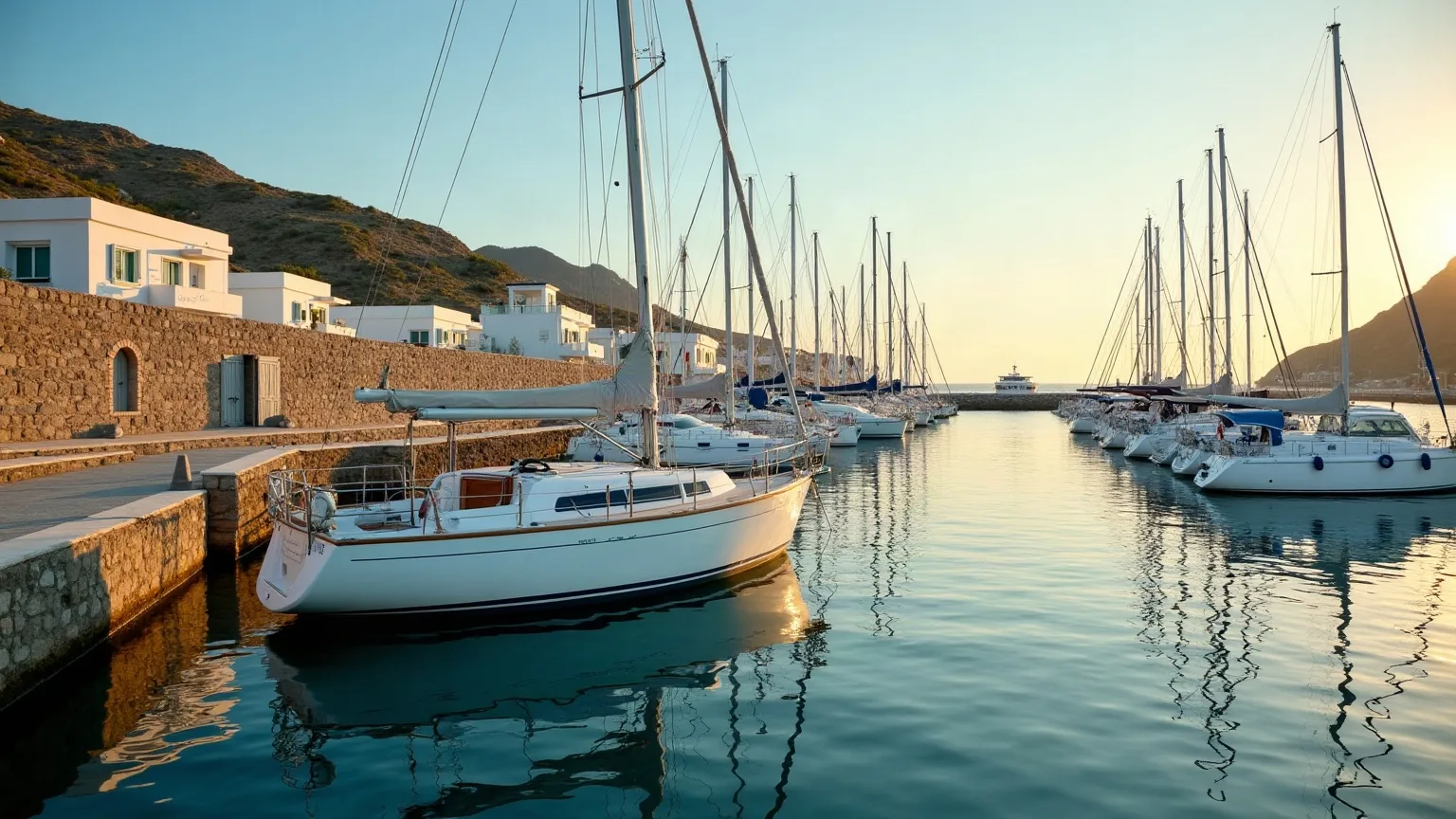
The two main yacht ownership options are easy to name. You can buy a yacht outright and run it yourself, or buy it through a charter programme, where a charter company puts the yacht in its fleet for a fixed term and runs it for you. The first gives you full control and all of the costs. The second gives up much of that control in return for an income and far less work.
Neither route is better in itself. The right one depends on how often you will sail, which weeks you want, and how much of the running of a yacht you want to handle yourself. Here is how the two compare, point by point.
Outright ownership
Buying outright means the yacht is yours from the day of purchase, and so is every decision about it: where it is based, when it sails, who services it and when it is sold. Nobody else books it, and nobody else uses it unless you invite them.
The bills come with the same freedom. The berth, the insurance, maintenance and every other operating cost are yours, whether you sail for two weeks a year or twenty, and so is the work of organising them. If you are weighing up yacht ownership in Greece, our ownership page sets out the support available before, during and after a purchase.
A broker can search the market for you, arrange viewings and negotiate the price, and the same team can handle the sale when the time comes. Our yacht brokerage service works for buyers and sellers alike.
How the yacht is used also shapes its paperwork. Under the UK flag, for example, a yacht registered as a pleasure vessel is one that makes no money for its owner, while a boat that is hired out to others goes on a different part of the register. Other flags have their own rules, so decide how the yacht will be used before you register it.

Charter programme
In a charter programme you buy a yacht and place it in a charter company’s fleet for a fixed term, usually five years, although some programmes run for three. The company markets the yacht, takes the bookings and looks after it. In return you receive an income and a set number of weeks on board.
Programmes differ most in how that income is paid, and in who carries the risk if the yacht does not book well:
| Model | How the owner is paid | Who carries the risk |
|---|---|---|
| Guaranteed income | A fixed monthly payment, whatever the yacht books. The company usually covers the running costs. | The charter company |
| Revenue share | A share of the charter revenue, after the yacht’s operating costs have been taken out. | Shared, and it rises and falls with bookings |
| Variable | All of the revenue and all of the expenses pass to the owner. | The owner |
At the end of the term you usually choose between keeping the yacht for private use, selling it, often through the charter company’s own brokerage, or trading it in against a newer yacht and starting a new contract.
If you already own a yacht and want to see how a management agreement divides the work and the income, read what charter management means for an owner. This guide is about the choice you make before you buy.
Control over use
Owned outright, the yacht is available whenever you want it. In a charter programme your own time on board is written into the contract, and it has to fit around the weeks the yacht earns.
How much time you get varies from one programme to the next. Many offer up to twelve weeks a year, depending on availability and demand. Others set four to six weeks, and some revenue-share arrangements leave the owner’s use unlimited, because every week the owner sails is a week that earns nothing.
Timing matters as much as the number of weeks. In Greece the busiest charter weeks fall in July and August, so programme owners usually find it easier to take their time on board in May, June or September, which are also some of the best months to sail in Greece.
What each route lets you decide
Outright
- Where the yacht is based
- When you sail, peak weeks included
- Who services it, and when
- When to sell, and to whom
Charter programme
- Your owner weeks, within the contract
- Which programme and base you join
- Keep, sell or trade in at the end of the term
Running costs
Running costs are where the two routes feel most different from one year to the next. An outright owner pays all of them. In a guaranteed-income programme the charter company usually covers maintenance, insurance and berthing for the length of the contract. In a revenue-share programme those costs come out of the charter revenue before the owner is paid.
| Cost | Outright | Guaranteed income | Revenue share |
|---|---|---|---|
| Berthing | Owner | Charter company | Out of charter revenue |
| Insurance | Owner | Charter company | Out of charter revenue |
| Maintenance | Owner | Charter company | Out of charter revenue |
| Loan repayments, if financed | Owner | Owner | Owner |
Each contract sets its own split, so treat the table as the usual pattern rather than a rule. One cost never moves: if the yacht is bought with a loan, the repayments stay with the owner whatever the yacht earns, and in some guaranteed programmes they are the only cost the owner still carries.
For the other side of the arrangement, what guests pay for a week and what drives that price, see our guide to how much it costs to charter a yacht in Greece.
Depreciation
Both routes end with a yacht that is older than the day you bought it, and its resale value will reflect its age, its condition and the hours on its engines. What differs is how hard those years were.
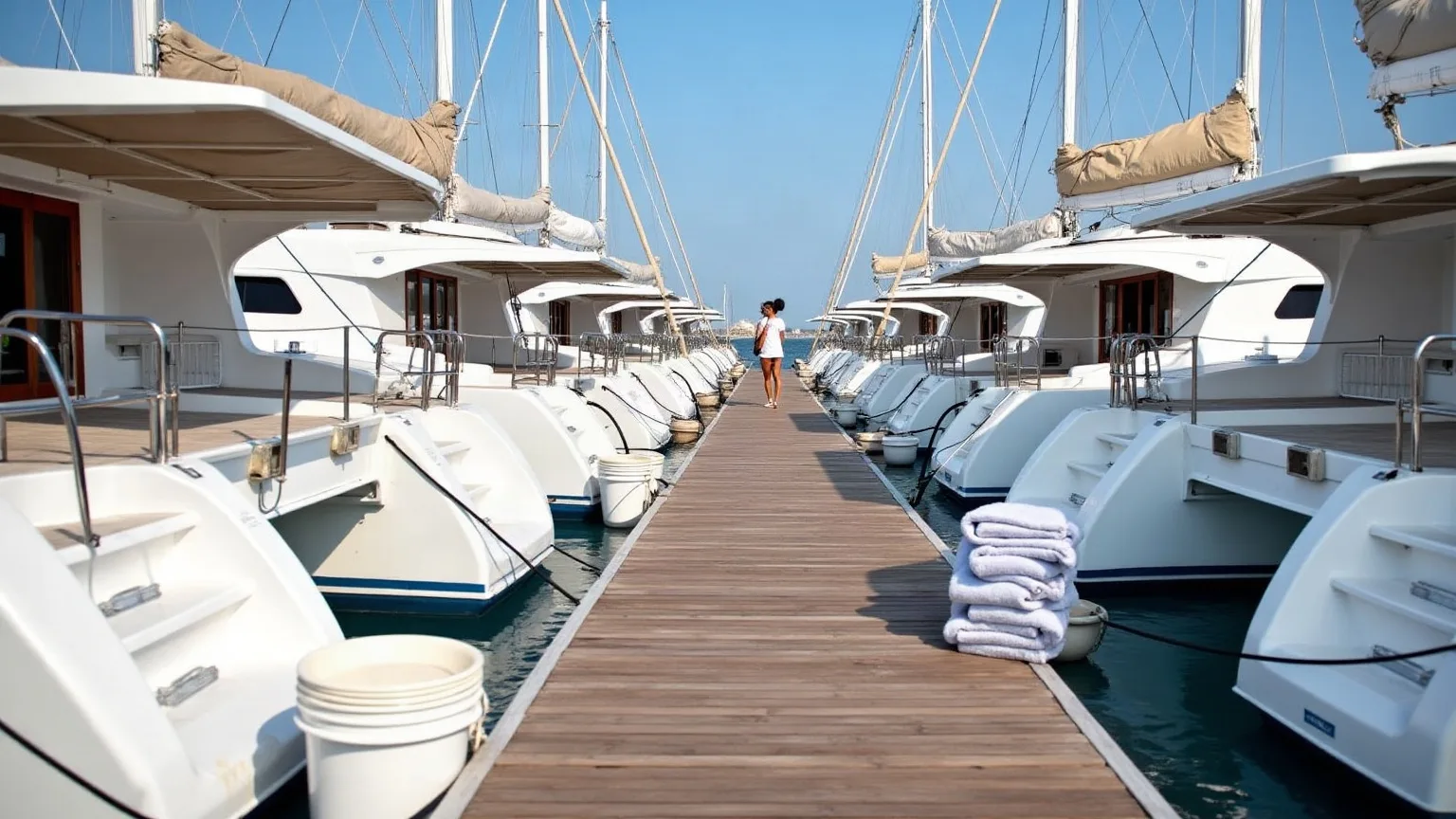
A yacht in a charter fleet is sailed by guests who change from one charter to the next. Ex-charter yachts often come back to the market with high engine hours and tired interiors, and buyers take that into account when they make an offer.
A yacht in private hands is used only by its owner and the owner’s guests, and the owner decides how it is maintained. That does not guarantee a better price, but it is the part of resale value an owner controls directly. In many programmes, on the other hand, the company has paid for the maintenance throughout the term.
If you expect to sell at the end, build the yacht’s likely condition into the decision from the start rather than discovering it at the point of sale.
Which suits whom
Outright ownership suits an owner who wants to sail often or at short notice, wants the yacht in July and August, likes to keep it set up their own way and is ready to pay for and organise the running costs.
A charter programme suits an owner who sails a few weeks a year, is flexible about which weeks, and would rather the yacht were working and maintained than waiting in a berth. Because most programmes end with the option to keep the yacht, it can also be a way into ownership that turns into private use later.
Three questions to answer first
- How many weeks a year will you really be on board, and which ones?
- Do you want running costs you control, or costs someone else carries for a fixed term?
- What do you want to do with the yacht when the term, or your first years of ownership, come to an end?
Once the route is clear, the yacht itself comes next. Browse the sailing yachts for sale in Greece, or the power yachts if a motor yacht suits you better.
Frequently Asked Questions
Does a yacht in a charter programme make money?
It earns an income, which is not the same as a profit. In a guaranteed-income programme the owner receives a fixed monthly payment whatever the yacht books, while in a revenue-share programme the income depends on bookings after costs. Whether the total covers the purchase depends on the price paid, any loan and what the yacht is worth at the end.
What is fractional yacht ownership?
Fractional or syndicate ownership is where several people own one yacht together and share its costs and its time. With five owners sharing a season, each would have roughly four weeks on board. The syndicate agreement is the key document, because it sets how decisions are made and how a share is sold.
Is an ex-charter yacht a good buy?
It can be. Yachts come onto the market when their programmes end, often through the charter company’s brokerage. Charter use is hard on a boat, though, and ex-charter yachts often have high engine hours and tired interiors, so have a condition survey done before you commit. Many insurers ask for one anyway.
Sources
- Practical Sailor, Charter Boat Ownership Programs Explained: A Simple Financial Overview. https://www.practical-sailor.com/mailport-ps-advisor/charter-boat-ownership-programs-explained-a-simple-financial-overview/
- Cruising World, Charter Companies on Owning a Charter Sailboat. https://www.cruisingworld.com/charter/charter-companies-owning-charter-sailboat/
- GOV.UK, Register a boat: The UK Ship Register. https://www.gov.uk/register-a-boat/the-uk-ship-register
- Yachting Monthly, Shared boat ownership: All the fun at a fraction of the cost? https://www.yachtingmonthly.com/cruising/cruising-life/shared-boat-ownership-all-the-fun-at-a-fraction-of-the-cost-100694
- Yachting World, Second hand boats: getting a yacht survey. https://www.yachtingworld.com/yachts-and-gear/second-hand-boats-getting-a-yacht-survey-139662
Tell us how many weeks a year you want to sail and what kind of yacht you have in mind, and we will go through both routes with you for that yacht.
Talk to us about ownership