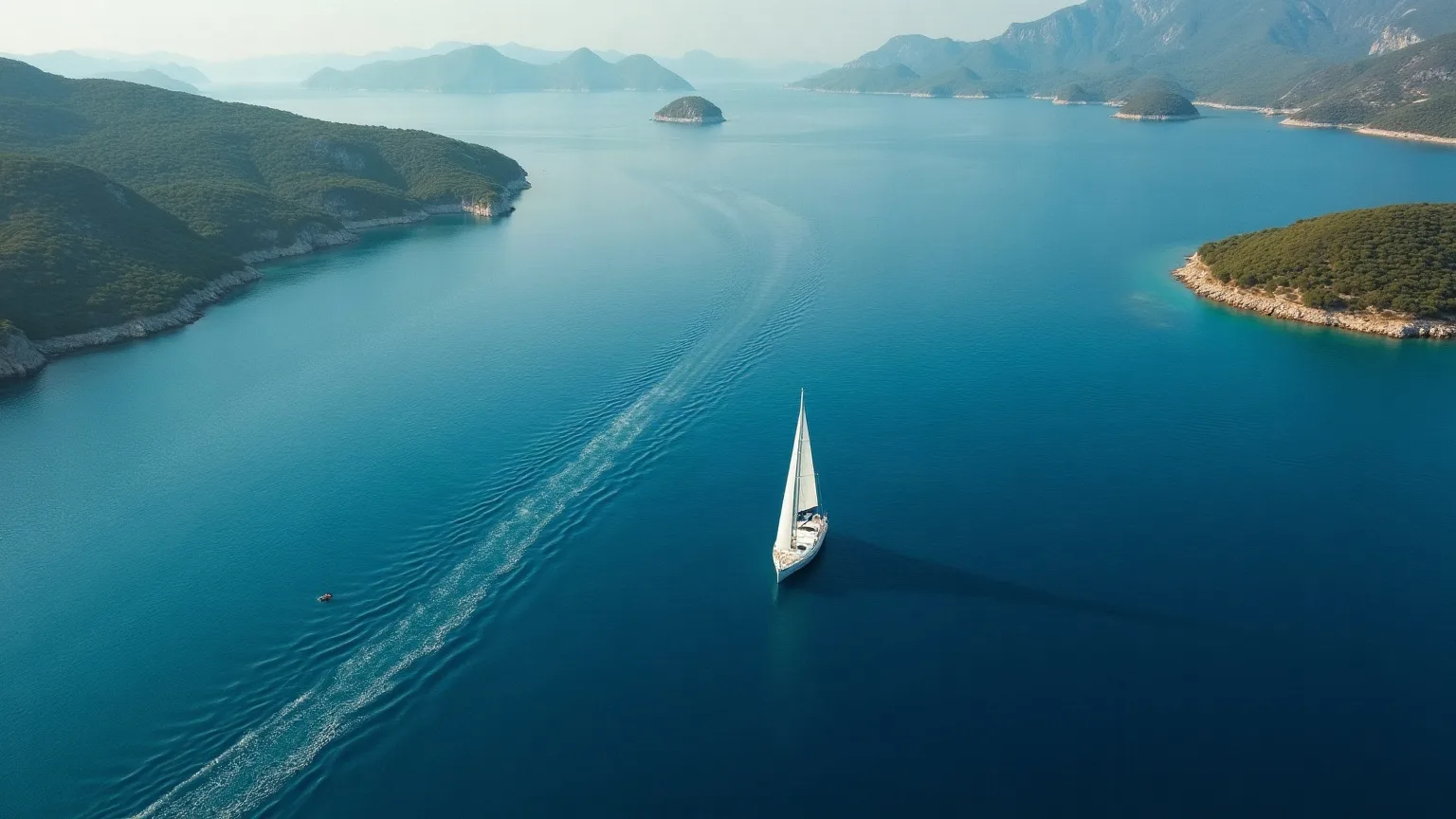
A charter week in Greece gives you about six days of sailing, so the ceiling is one new stop a day. In practice, four or five islands with a day kept free for the weather is what makes a week feel relaxed rather than rushed. How many islands in one week you can really enjoy depends on the distances, the wind and how long you want to stay in each place.
The common first-charter mistake is a long list of famous names and a week spent under way. A week usually works better the other way round: fewer islands, and more time in each.
Here is what sets the limit, what a day of sailing actually covers, and how that plays out in the Ionian and the Cyclades.
What limits a week
Three things limit a week: the calendar, the speed of the yacht and the wind. The number of islands you would like to see comes a distant fourth, and the sea you choose from our destinations decides how far apart they are.
The calendar is tighter than it looks. Charter weeks in Greece traditionally run from Saturday to Saturday, with boarding in the afternoon and departure the following morning. That leaves about six days of sailing, and the last of them has to end close to the base, so in effect the route is a loop.
The first afternoon goes on the handover and the shopping, and the last evening is spent close to the base so that the yacht is ready for check-out in the morning. The islands have to fit into the days in between.
The speed of the yacht sets how far each day can reach. The sailing yachts and sailing catamarans on our list give cruising speeds of around 7 to 8 knots (the Lagoon 420, for example, lists 7), and a knot is one nautical mile per hour.
The wind decides when you can sail comfortably. In the Aegean in summer it tends to build through the day, which is why the meltemi shapes so many plans. In the Ionian the afternoon breeze is lighter and more predictable. Either way, mornings are the easy part of the day, and a plan built around them works better than one that ignores them.
Realistic daily distances
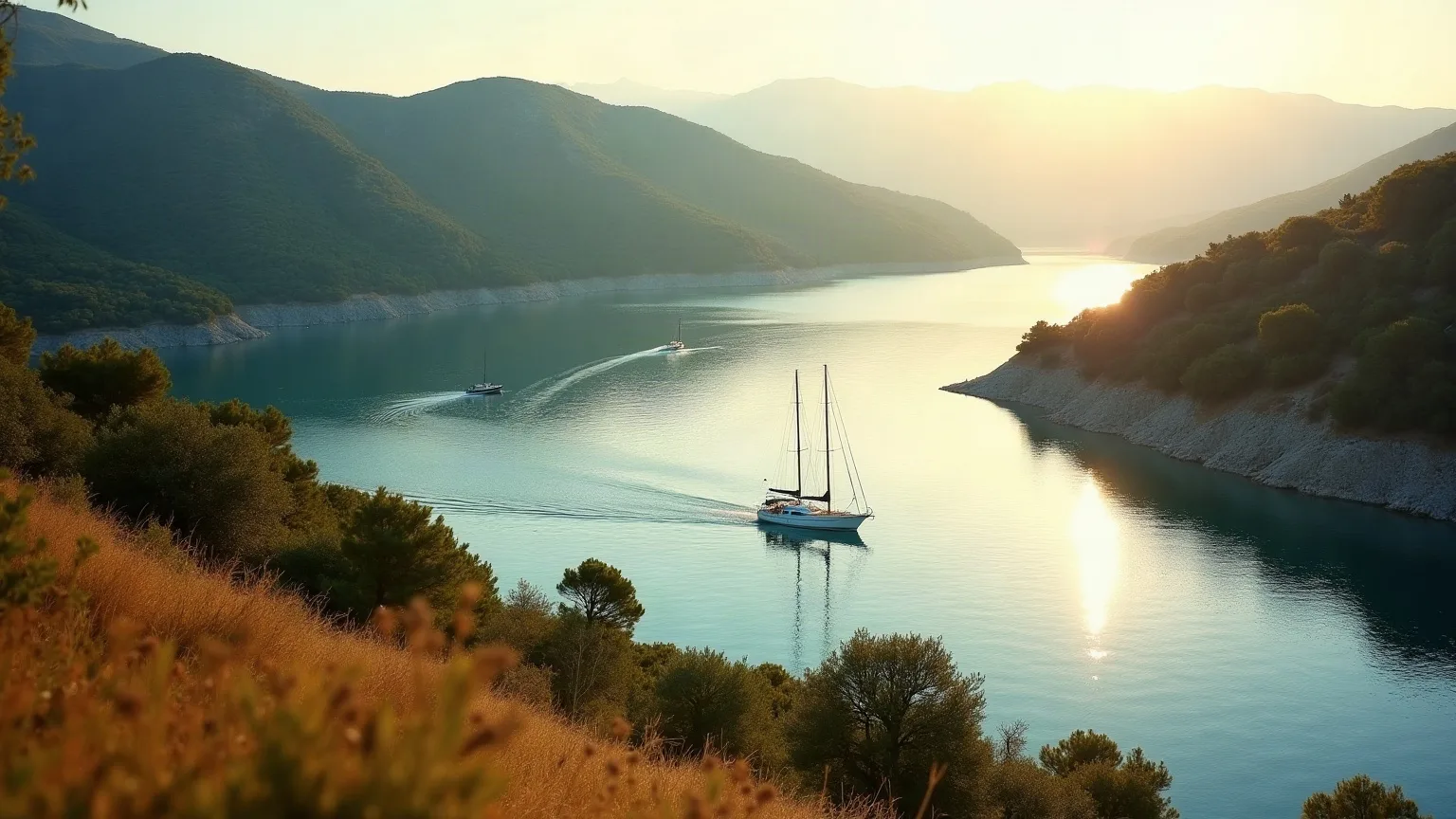
A realistic day is two to four hours under way, which at 7 to 8 knots is roughly 14 to 32 nautical miles. That leaves the rest of the day for swimming, lunch at anchor and time ashore.
| Hours under way | At 7 knots | At 8 knots |
|---|---|---|
| 2 hours | 14 nautical miles | 16 nautical miles |
| 3 hours | 21 nautical miles | 24 nautical miles |
| 4 hours | 28 nautical miles | 32 nautical miles |
| 5 hours | 35 nautical miles | 40 nautical miles |
Treat these as best-case figures for sailing time. A headwind, a lumpy sea or a detour to a better anchorage all stretch them, and the clock keeps running while you raise the anchor, wait for a space on the quay or come alongside.
One longer day in the week is normal and often the best sailing of the trip. Two or three in a row is where a holiday starts to feel like a delivery trip, and it is the first thing to cut when the plan looks crowded.
Ionian
The Ionian is where a week holds the most islands, because the distances between them are short and the water is sheltered.
Our first week in the Ionian shows what that means in practice: every leg runs from about six to sixteen nautical miles, and the week still takes in Lefkada, Meganisi, Kastos or Kalamos, Ithaca and Kefalonia. Most of those days are two or three hours under way, with the whole afternoon free.
The wind helps as well. The Ionian sits outside the meltemi, and its northwesterly sea breeze fills in through the afternoon and dies away in the evening. You can plan tomorrow tonight and be roughly right, which is why a busier itinerary is realistic here. If this is your sea, start with our Ionian Islands yacht charter page.
Cyclades
The Cyclades hold fewer islands in the same week, because the passages are longer and more exposed and the summer wind is stronger.
In July and August the meltemi can blow hard from the north for several days at a time, and it is at its strongest in the channels between islands. A leg that is easy at eight in the morning can be a long, wet beat by mid-afternoon. Crews who enjoy the Cyclades plan the hard legs downwind and early, and they keep a day in hand for the day the wind does not ease.
That usually means choosing a smaller group of islands that sit close together and seeing them properly, rather than ticking off famous names scattered across the group. Outside the peak weeks, in June or September, the wind is often lighter and the same week can stretch a little further. Our guide to the best time to sail in Greece covers how the months compare, and our Cyclades yacht charter page is the place to start for this group.
Why fewer is often better
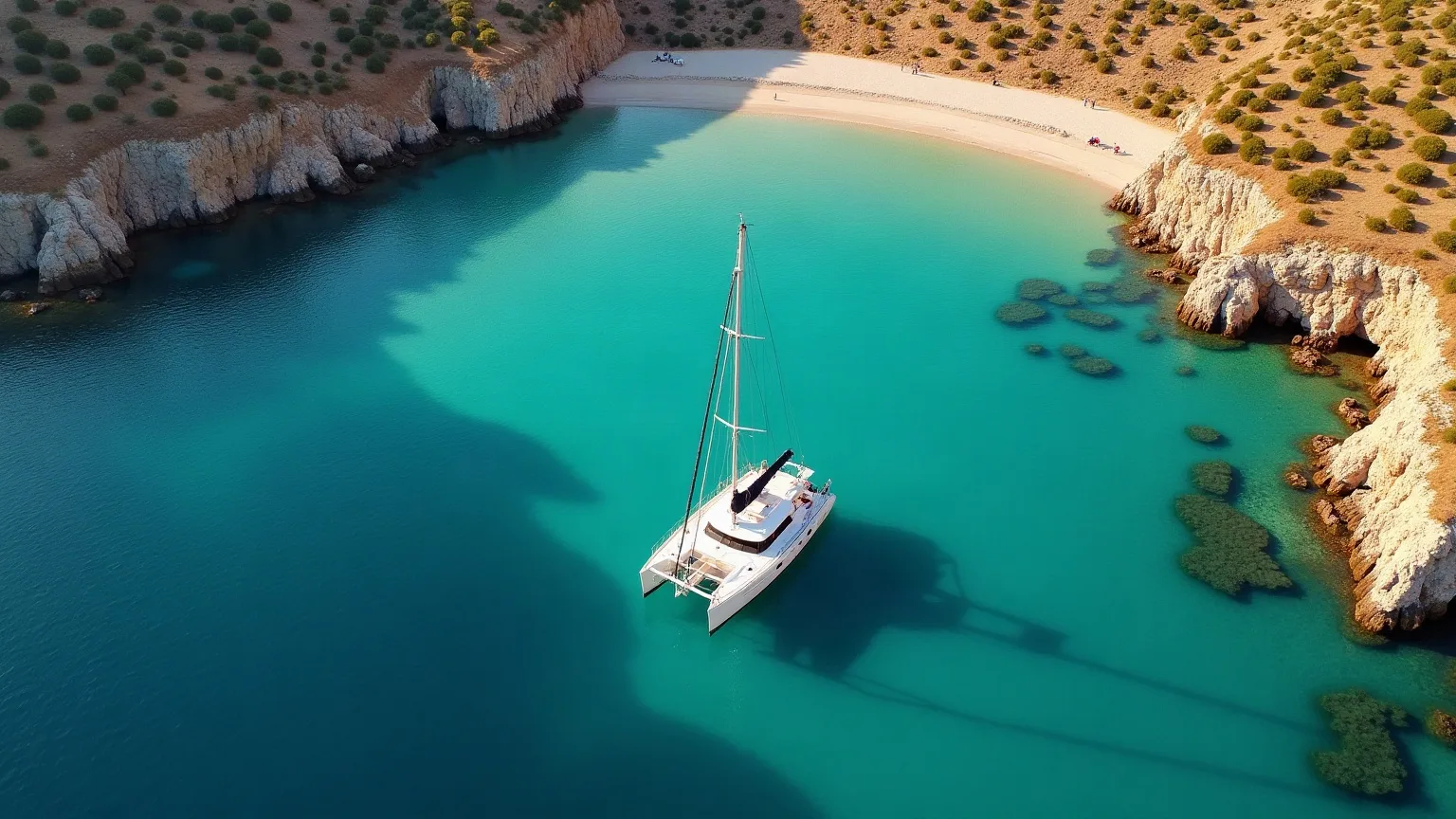
Every move costs more than the sailing time. Packing up, raising the anchor, finding a space and settling in again take a good part of the day, and none of it is the holiday.
Staying two nights in one place turns the middle day into a free day: a walk up to the village, a long swim, a lunch that does not have to end. The same week with one fewer island often feels longer, not shorter.
A looser plan also leaves room for the things that only happen when nobody is in a hurry: a second swim in a bay you like, an extra hour over lunch, a morning when the engine stays off.
Signs the plan has too many islands
- More than one long day of four hours or more under way.
- No day without a passage, so there is nothing to give up if the wind turns.
- Afternoon departures in the Cyclades in July or August.
- A last leg back to base that is also the longest of the week.
A skipper changes this less than people expect. The yacht is no faster, but the route fits the wind better, because a skippered yacht charter in Greece puts someone on board who knows which bay is worth the detour.
A sample week
A week that works in most regions has four islands, a quiet bay and one day with no passage at all. The shape matters more than the names.
| Day | Plan |
|---|---|
| Saturday | Board in the afternoon, shop and stay at or near the base |
| Sunday | A short first hop to the nearest island, to settle in |
| Monday | Second island, leaving in the morning |
| Tuesday | No passage: swim, walk and eat ashore |
| Wednesday | The longest leg of the week, started early, to the third island |
| Thursday | A short run to a quiet bay or the fourth island |
| Friday | Back towards the base, arriving with time in hand |
| Saturday | Check-out in the morning |
If the weather is kind, the free Tuesday becomes a fifth island. If it is not, the plan already has room to absorb a lost day without rushing the end of the week. To match this shape to a region, choose the sea first and the islands second.
Frequently Asked Questions
How far can you sail in a day?
On a charter week, two to four hours under way is a comfortable day. At the 7 to 8 knots our sailing yachts and catamarans list as cruising speed, that is roughly 14 to 32 nautical miles, with time left for swimming and time ashore.
What does a one-week Cyclades sailing itinerary look like?
Fewer islands than most people expect. With longer passages and the meltemi in July and August, a good Cyclades week usually covers a small group of islands, sails the hard legs early and downwind, and keeps a spare day for the wind.
What does a one-week Ionian sailing itinerary look like?
Short daily legs between islands that are close together, typically starting from Lefkada, Corfu or Kefalonia. Our first-week Ionian route keeps every leg between about six and sixteen nautical miles.
Sources
- NOAA National Ocean Service, What is the difference between a nautical mile and a knot? https://oceanservice.noaa.gov/facts/nauticalmile_knot.html